Cost benchmarks checked against Angi's October 15, 2026 update; technical references checked against U.S. Access Board ADA Section 609 and manufacturer installation instructions. Local quotes and the exact product instructions control real-world installation.
A grab bar is a small part of an accessible bathroom, but installing one correctly is not always a small job. A bar attached to suitable structural backing may take relatively little labor. A bar placed where there is no adequate backing can involve specialist anchors—or opening the wall and reinforcing it. Tiled showers add waterproofing concerns; fiberglass surrounds can require an approved mounting system and a careful inspection of what is behind the panel.
That is why the useful question is not simply “How much is a grab bar?” It is how much will a securely installed bar cost in this exact wall and location? This guide explains where the money goes, how to compare estimates, and what to confirm before drilling.
Grab bar installation cost in 2026
Angi’s published October 2026 benchmark puts professional installation at about $200–$350 per grab bar. Angi also lists possible wall reinforcement and preparation of about $150–$400 per location when needed. Those figures help establish a budget, but the final amount depends on site conditions and what each contractor includes.
| Item | 2026 planning reference | What to verify |
|---|---|---|
| Professional grab bar installation | $200–$350 per bar (Angi benchmark) | Does this include the bar and all hardware? |
| Extra reinforcement/site preparation | $150–$400 per location where needed (Angi benchmark) | Opening the wall, blocking, repair, waterproofing? |
| Basic straight bar, material | About $20–$100 in Angi’s product examples | Length, finish, load rating and mounting system |
| Fold-down bar, material | About $50–$280 in Angi’s product examples | Hinge, backing, space and mounting requirements |
Do not automatically add every row. A contractor’s installation price may already include a basic bar and fasteners; another quote may be labor-only. The reinforcement amount is an extra possible scope of work, not a charge that every bathroom requires.
Source: Angi — Grab Bar Installation Cost (updated October 15, 2026).
What changes the price?
1. The wall behind the bar
A straight bar on a wall with known, sound framing and compatible mounting hardware is easier to price than one mounted through tile over an unknown cavity. The contractor needs a secure load path into the structure or a specific listed anchoring solution suitable for that wall. The tile itself is generally a finish, not structural reinforcement.
2. The bar’s location and shape
A single horizontal shower bar is different from a long side-wall toilet bar, an angled bar by an entry, or a fold-down toilet support. The installation layout determines how many anchoring points are needed, which wall surfaces can be used, and whether the bar conflicts with a door, shower control or seat.
3. The surface material
Tile and stone need appropriate drilling methods and waterproof sealing. Fiberglass or acrylic surrounds may flex and have a gap behind them. Drywall over framing can be simpler where studs or backing are accessible. Masonry and concrete require their own compatible anchor approach. A contractor should quote based on the actual substrate—not only the visible finish.
4. Whether the wall must be opened
If structural backing is missing, some rated anchor systems may be suitable for a specific hollow-wall construction, but not for every shower wall. Other situations require opening the wall to install blocking. Once a wet-area wall is opened, the cost may include rebuilding waterproof layers, tile, grout and finish.
5. Number of bars installed in one visit
Installing two or three bars during the same appointment may spread travel and setup time across the job. Ask for a combined quote; do not assume that the per-bar benchmark multiplied by the number of bars will match the final price.
Sample budgets: how to compare scopes
The following are illustrative scenarios, not quoted project prices. They show how to think about an estimate without pretending that every home has the same walls.
| Scenario | Likely scope | Main unknown |
|---|---|---|
| One bar beside toilet | Bar, verified backing/anchors, installation | Where the studs or backing actually are |
| Two bars in tiled shower | Bars, careful drilling, secure anchors, waterproof sealing | Hidden substrate and waterproofing system |
| Fold-down toilet support | Specialized bar and substantial secure backing | Hinge forces, wall capacity, swing clearance |
| Bar on fiberglass surround | Wall inspection, compatible mounting method, sealing | Void between surround and structural wall |
| Shower renovation already underway | Install blocking before wall finish; mount bars after finishing | Coordination and exact final bar location |
A modest-looking bar installation can be expensive if the wall assembly must be rebuilt. Conversely, planning blocking while a bathroom is already under renovation may avoid opening finished walls later.
Installing grab bars in tile: what the estimate should cover
Tile introduces two separate tasks: secure structural attachment and preserving water resistance. A contractor should know what lies behind the tile and follow the bar manufacturer’s approved fastening method. Penetrations in wet areas must be sealed using materials and methods compatible with the wall and waterproofing system.
Before hiring, ask which tile or stone drilling method the installer will use, how they will locate structural support, whether the mounting fasteners will be long enough for the entire wall assembly, and how each hole will be sealed.
The installation instructions for the chosen model matter. For example, Moen publishes distinct instructions for conventional fastening and for approved SecureMount hollow-wall anchors on particular products. These are not blanket permission to use a random drywall anchor behind any shower tile.
Moen — Grab bar installation instructions and anchor guidance.
Can grab bars be mounted without studs?
Sometimes, with a compatible, manufacturer-approved mounting system. The answer depends on the wall assembly, the exact bar and the anchor’s instructions. A hollow-wall anchor designed for a specific drywall construction should not automatically be used through any tile, foam-board shower, acrylic liner or unknown wall cavity.
Some manufacturers offer purpose-designed mounts for off-stud locations. Others require structural wood backing. The installer must verify that the combination of wall, fasteners and bar supports the intended use.
A suction handle may be marketed as a positioning or balance aid, but it is not a substitute for a properly installed structural grab bar that someone may need to arrest a fall or assist a transfer. Never replace required fasteners with adhesive or suction hardware unless the specific system is explicitly designed and approved for the intended load and application.
Grab bar placement: the person comes before the tape measure
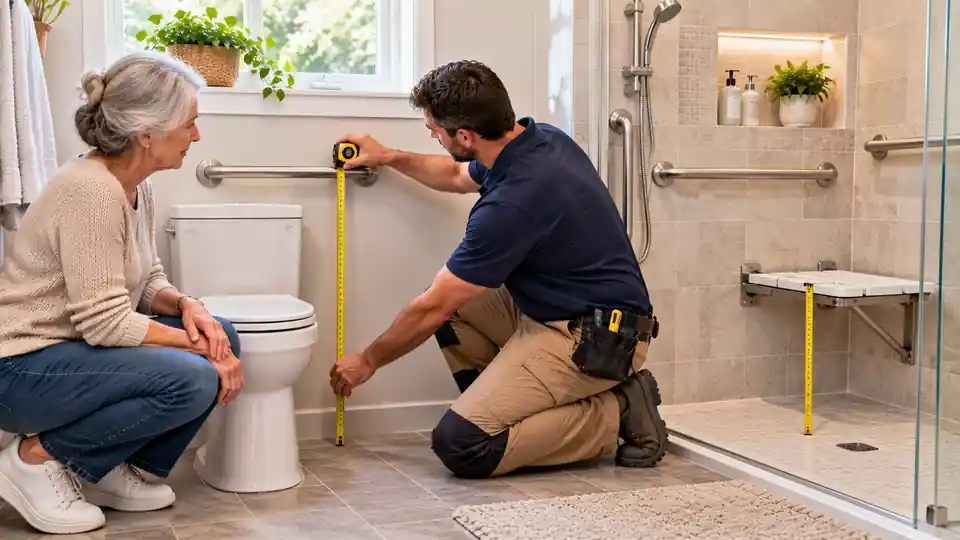
Placement influences both safety and the cost of installation. A bar may be securely fixed yet too far away to help someone stand, turn or transfer. Ask the intended user to identify the movements that are difficult before the wall is drilled. An occupational therapist can help when the person has significant mobility or transfer limitations.
For ADA-covered facilities, the U.S. Access Board’s Section 609 specifies that many horizontal grab bars are mounted 33–36 inches above the finished floor, measured to the top of the gripping surface, with particular exceptions and location rules. It also addresses grip size, wall clearance and structural strength.
Those are not automatic legal installation requirements for every private home. A home’s exact layout and user’s needs may warrant a different arrangement where legally permitted. Our accessible bathroom measurements guide explains toilet, shower seat and grab bar heights, along with the difference between ADA-covered facilities and strictly private residences.
Technical reference: U.S. Access Board — ADA Standards, Section 609.
What does a secure installation actually require?
A secure installation is more than a bar that feels tight when tugged gently. In ADA-covered applications, the structural standard specifies that allowable stresses must not be exceeded when a vertical or horizontal force of 250 pounds is applied at any point in the grab bar, fastener, mounting device or supporting structure. That is a technical design criterion—not a DIY instruction to hang a 250-pound weight on the new bar.
Ask the installer to verify:
- bar model and load requirements;
- wall construction and support;
- fasteners or approved anchoring system;
- correct mounting orientation and specified spacing;
- no rotation or movement of the bar;
- sealed wet-area penetrations;
- no interference with shower seats, controls, door swings or wheelchair transfers.
If the contractor cannot identify the anchor or explain what it attaches to, do not accept the installation simply because the bar looks straight.
Where should the first grab bars go?
Install bars around the movements that create the most risk; do not simply add identical bars to every wall.
At the shower entrance
Support during the step or transition can be different from support used once standing inside the shower. Check that the person can reach the bar before shifting weight and that doors or glass panels do not block it.
Near a shower seat
Consider how the user sits, stands and reaches the handheld shower. A bar mounted above or behind the seat may interfere with the transfer rather than help. The type and location of the seat should be chosen together with the bars.
Beside a toilet
Side and rear support may matter, depending on the transfer direction and available wall. A fold-down bar can be useful when there is no suitable side wall, but its hinges and fixing requirements deserve close attention.
Near a walk-in tub
The door threshold, seat transfer and standing position differ by model. Grab bars should not obstruct an outward-opening door or be attached to a fixture surface that the manufacturer does not approve as a structural support. See the walk-in tub door types guide.
DIY or professional installation?
A capable homeowner may be able to install a simple bar when the framing is known, the exact wall assembly is appropriate, the manufacturer provides clear instructions and the installer can follow them correctly. That does not mean every installation is a reasonable DIY job.
Hire someone qualified when you have an unknown shower-wall cavity, tile over complex waterproofing, a fiberglass surround with a void, a fold-down support with high leverage, an existing moisture problem, or a user who will depend on the bar for transfers.
A handyman may be appropriate for a straightforward installation with clear backing. A remodeling contractor or accessibility specialist is more suitable when reinforcement or waterproofing work is required. For placement around a complex mobility need, an occupational therapist can advise on use, while the actual installation should be performed by someone with the necessary construction skills.
What a grab bar installation quote should include
| Quote line | Question to ask |
|---|---|
| Product | Exact manufacturer, model, length, finish and load rating? |
| Quantity / placement | How many bars and where will each be mounted? |
| Wall assessment | How will framing, backing and concealed utilities be verified? |
| Anchors | Which approved fasteners or mounting system? |
| Waterproofing | How will wet-area penetrations be sealed? |
| Wall repair | Is blocking, tile repair, patching or repainting included? |
| Labor / travel | Fixed price, minimum callout fee, or hourly? |
| Warranty | What covers the hardware and the installer’s work? |
Ask the contractor to identify exclusions before work begins. “Install two grab bars” does not tell you whether they are prepared to address a wall with no suitable backing.
Four red flags in a low-priced quote
- “We can attach it anywhere.” Secure mounting depends on the wall assembly and approved hardware.
- “Tile is strong enough by itself.” Tile is not a substitute for structural support.
- “A little silicone will hold it.” Sealant may waterproof a penetration but does not replace mechanical attachment.
- “We don’t need to know who will use it.” Placement should reflect the transfer and reach needs of the person using the bathroom.
Can bathroom grab bars be funded by grants or insurance?
Sometimes, but eligibility varies by program and person. Certain Medicaid home- and community-based services programs, state or local housing repair programs, VA disability-related home adaptation benefits and rural home-repair assistance may support eligible safety modifications. Neither age nor having Medicare automatically makes a bathroom remodel free.
Check program eligibility and permitted work before authorizing an installation. Our bathroom accessibility grants by state directory and cost and financing guide explain the available routes and limitations.
Checklist before you approve installation
- ☐ Identify where support is needed during real movements.
- ☐ Confirm bar type, length and location with the user.
- ☐ Check interference with doors, shower controls and seats.
- ☐ Identify framing or approved anchoring method.
- ☐ Ask how hidden plumbing and wiring will be avoided.
- ☐ Confirm wet-area waterproofing plan.
- ☐ Obtain a written materials/labor/reinforcement breakdown.
- ☐ Clarify any wall repair allowance and warranty.
- ☐ Request a final installation inspection before regular use.
Frequently asked questions
How much does it cost to install one bathroom grab bar?
Angi’s October 2026 national planning estimate is about $200–$350 for professional installation of one bar. The exact price depends on the product, wall and scope, and may rise if blocking or finish repairs are needed.
Is it cheaper to install two grab bars together?
It can be, because setup and travel costs may be shared. Ask for one combined scope and a per-bar breakdown.
Can you install a grab bar on shower tile?
Yes, if the underlying wall and the chosen manufacturer-approved mounting method are suitable. The installer must manage structural attachment and preserve wet-area waterproofing; tile alone is not the support system.
Are no-drill grab bars safe?
Do not assume a no-drill or suction device offers the same support as a permanently mounted structural grab bar. Check the exact product’s use limitations and never depend on an unverified temporary handle for fall arrest or body-weight transfers.
Does the ADA require grab bars in my house?
The ADA generally does not apply to a strictly private single-family residence as it does to covered public facilities, although other housing rules and local requirements may apply. ADA specifications can still provide useful technical references; see our measurement guide.
Should grab bars be installed before or after shower tiling?
Ideally, plan bar positions and install suitable reinforcement while the wall is open, then complete waterproofing and finish work and mount the bars according to the manufacturer’s instructions. This avoids guessing about support later.
Sources and further planning
- Angi — Grab Bar Installation Cost, updated October 2026
- U.S. Access Board — ADA Standards, including Section 609
- Moen — Grab bar installation instructions
For planning the entire space, continue with Bathroom Safety for Seniors, Accessible Bathroom Measurements and the Walk-In Tub vs Walk-In Shower comparison.